You know that it is spring when the daffodils poke through, and then bloom to a nice yellow and white. Here is the latest photo shoot, just tonight, and at 7 pm. Got to play with my new fisheye lens too, and I like what I am getting with it. Next, a wedding awaits…….
I was recently asked to photograph a friends Corvette. I invisioned trying to pull off what I had seen done over at Strobist, where I had watched this video at You Tube. Looked easy enough, so off we all went to a dark and empty lot.
Taking specific images, of the front, side, and interior for each “pose”, I then layred them up in Photoshop. Added a reflection to some, and then made the Three view image below. Thanks Strobist!!!
After many failed attempts, I managed to capture a streak of lightning. I held the camera against a window and my face as to delete camera shake. Set the aperature at 2 seconds, f-stop of f-11, and continued to shoot in rapid sets......
This image is a "click and burn" image. My girl and I had one of our first dates here, on this bench, with the fireworks as a bonus. So, I set up two flashes, with snoots, and left the shutter open for two seconds. I took the liberty of adding some extra firework explosions from the night, but you see the idea for a fun and sentimental image. Get creative, and enjoy the Fourth!
Think about making the biggest possible final sale before you even shoot!
Recently, I found myself returning to my old haunt of DownEast Maine. I was there (both) attending and shooting a wedding in the warm spring sun. The weather could not have been better, the family could not have been more welcoming. Everything was great. Shooting in the direct sun was a bit troubling, but not impossible.
The point of todays post is that I remembered some great advice as I drove five hours to the wedding. This advice is that we should shoot as if we are trying to make (and sell) the biggest package possible. Portraits are a no-brainer, but what about mail out cards, thank you mailings, wedding albums, ect? Thinking about what you need to make the most possible items is the way that I treat every event that I now photograph.
The only images that we can't sell are the ones that we don't take.
This means paying attention to even the smallest of details, as they will come in handy as backgrounds in albums. Albums that you can now make for the family, and eventualy sell. These details become “faded page overlays”, and run throughout albums and mailings as themes.
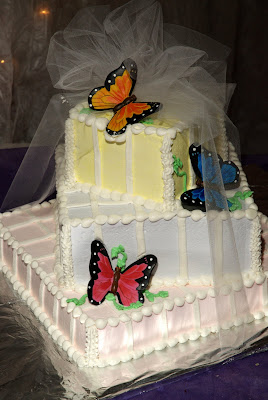
Here are some details from this wedding. I am posting these images mostly because they are at every wedding, and observing them will pay off. Plus I just loved the “Dead head” grooms cake.
Lastnight, I was invited to observe the night sky with a new friend of mine named Wayne. I jumped at the chance, as I love all things photography. Little did I know just how mind blowing this night would be. Please take a moment and check out his site, HERE, and look at his awesome images before returning back here.
Wayne had informed me about his “cameras" before. These cameras are unlike anything that I have ever come across. They do not look like cameras at all. These computer operated sensors attach to his giant telescope, and record, over time, what the telescope is pointed at. Long exposures are requried most of the time due to faint light sources of objects very far away. This requires that his telescope “track” the object that is being photographed. This is done, via more computers and a vast knowledge base of both the night sky, and the operating systems of the necessary equipment. Lucky for us Wayne has both.
The digital “super cameras” that are designed to image the night sky through a telescope require cooling systems, capture images in black and white, and come with a steep learning curve. Wayne shoots his images in a series of many. By using different colored filters (red, blue, and green) he gets “color” images. Let me just say that one must really want to take amazing images to go through all of this work.
However, these super digital cameras were not the evenings “event cameras”, as Wayne decided to go with a new Nikon digital SLR for taking long exposure images through his gigantic telescope. This was the first time that Wayne would be attaching his Nikon digital SLR to his telescope, and we were curious about how they might turn out. Would this set up even work? How would the focusing work, and what settings should one even use for this image process? Great questions, simple method for finding out the answers. We would try, and see what we get.
How is this? This image of the Orion Nebula was one of the evenings first images. Not bad, eh? Way to go Wayne!
The above image was at iso 200, taken for about 3 or 4 minutes, with the telescope locked on (or tracking) the nebula.
The night was spent looking back in time, through his telescope, and looking at objects that I never though I would see with mine own eyes. I saw Saturn through the telescope, so good infact that it looked like a fake cut out. The rings were visable as was the shaddow of the rings on the planet itself. We saw some of Saturns moons as well, and I enjoyed this paticular evening like none other.
A very large thanks goes out to Wayne for inviting me and working feverishly through the night so that I could see the sky. I am so thankful, and I will be forever anxious to return.
 You know that it is spring when the daffodils poke through, and then bloom to a nice yellow and white. Here is the latest photo shoot, just tonight, and at 7 pm. Got to play with my new fisheye lens too, and I like what I am getting with it. Next, a wedding awaits…….